10 Vintage Wedding Ring Ideas
The allure of a vintage wedding ring lies in its story. Unlike modern, mass-produced bands, a vintage or vintage-inspired ring carries an air of romance, architectural history, and unmatched craftsmanship. Whether you are hunting for an authentic antique or looking to design a custom piece that pays homage to the past, drawing inspiration from historical design eras ensures your ring will remain timeless.
From the bold geometry of the 1920s to the delicate, nature-inspired motifs of the Edwardian era, here are 10 vintage wedding ring ideas to inspire your forever piece.
1. The Art Deco Geometry
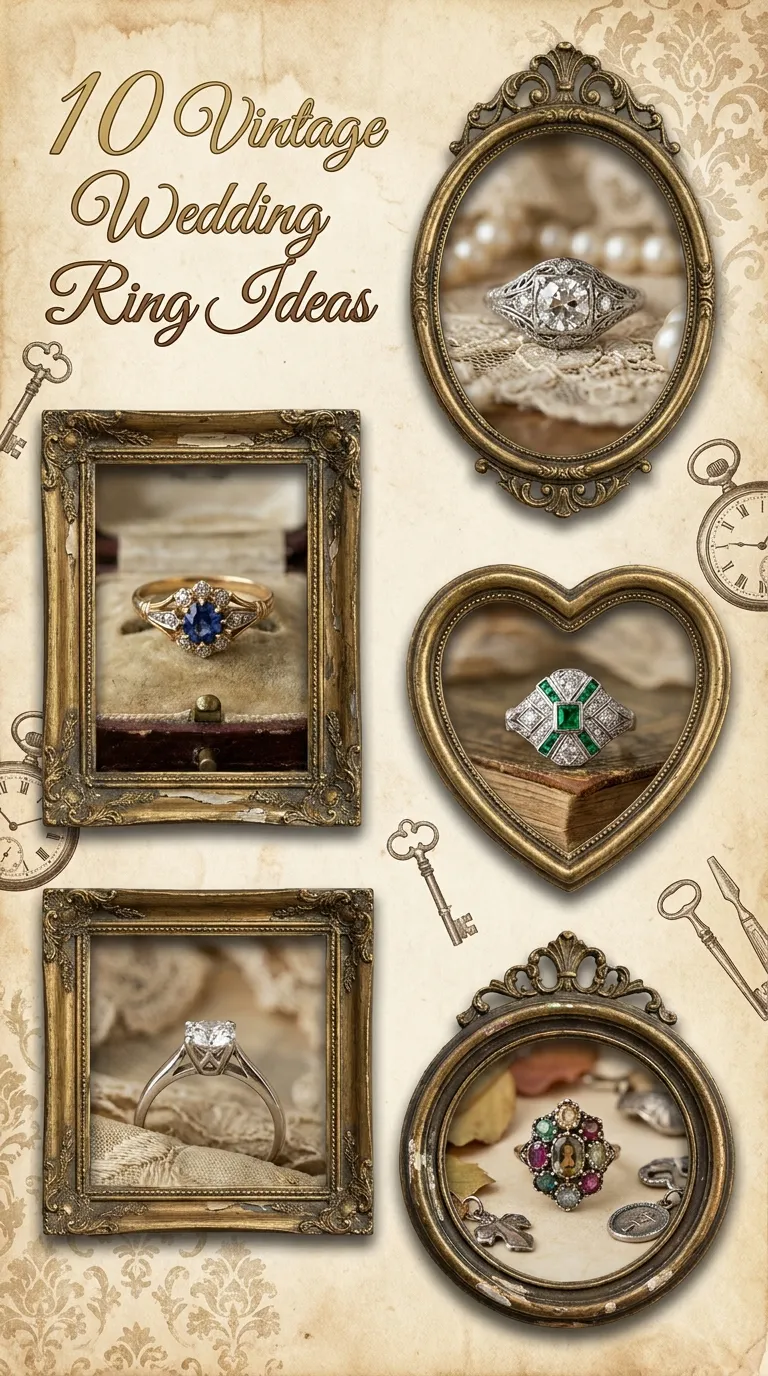
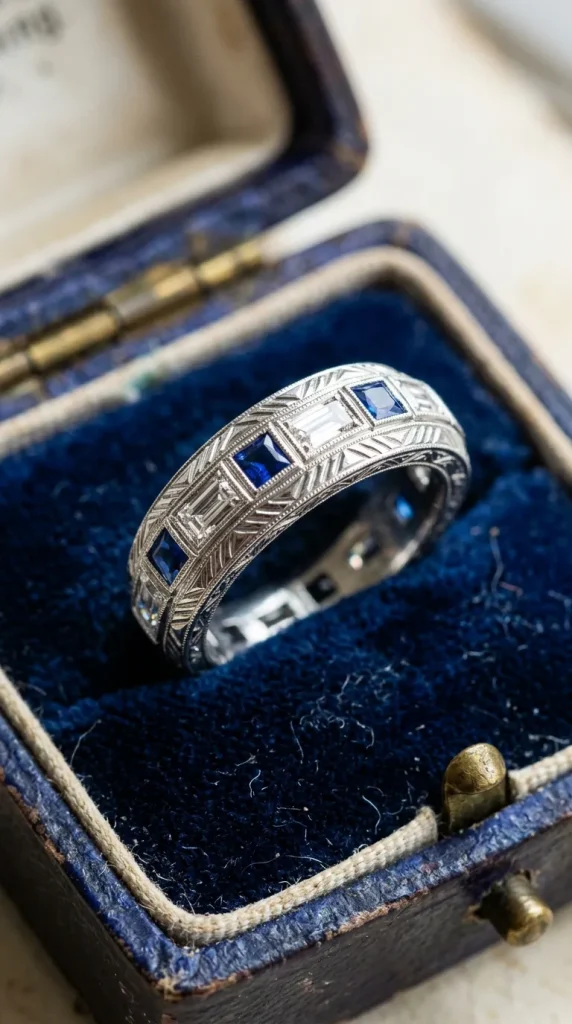
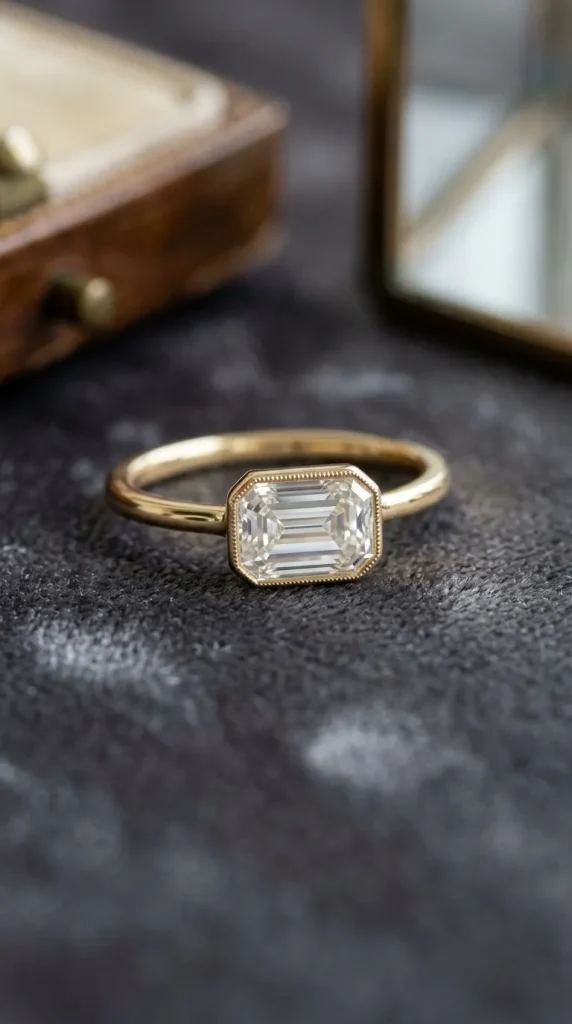
The Art Deco era (1920–1935) remains one of the most popular periods for vintage jewelry design. Characterized by bold geometric shapes, clean lines, and symmetrical patterns, Art Deco wedding rings are perfect for the modern bride who appreciates a structured, architectural aesthetic. Instead of standard round brilliant cuts, Art Deco rings frequently feature step-cut diamonds like emerald or Asscher cuts. To achieve this look, opt for a band that incorporates baguette diamonds or repeating square-shaped metal bezels.
2. Edwardian Filigree and Lace
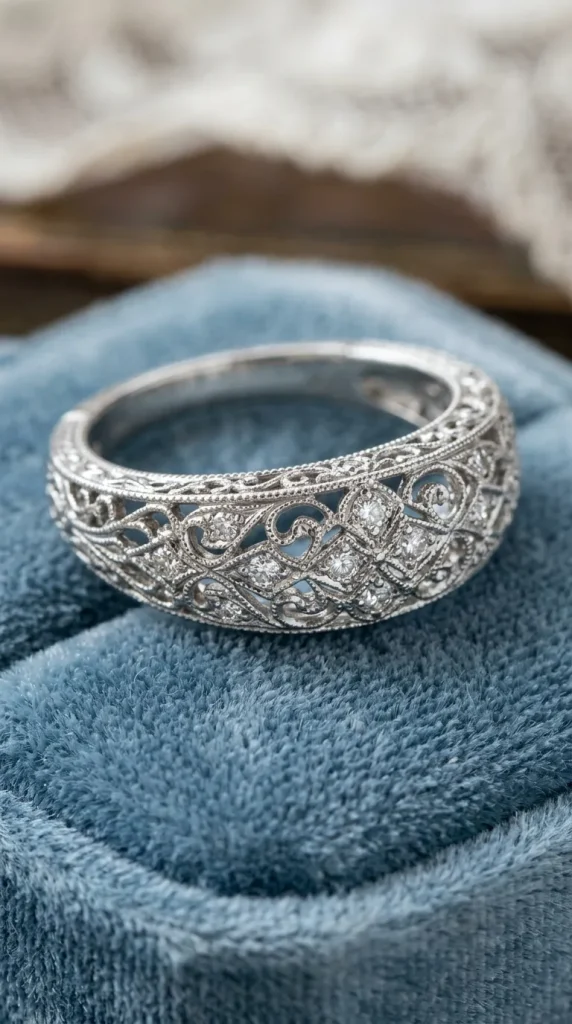
If your style leans more toward delicate romance, the Edwardian era (1901–1915) offers incredible inspiration. Jewelry from this period is famous for its intricate filigree work—a technique where fine threads of precious metal (usually platinum) are twisted into gorgeous, lace-like patterns. Edwardian rings often look lightweight and airy, resembling wearable lace. Incorporating milgrain edges (tiny beads of metal) and scrollwork into your wedding band creates an ultra-feminine, antique feel.
3. Victorian Serpent Rings
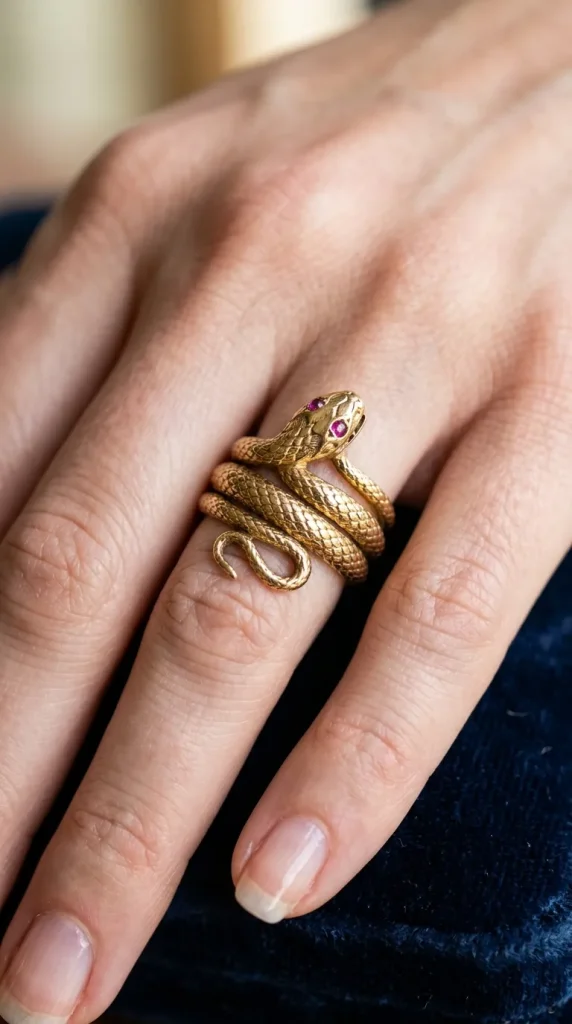
For a truly unique and historical choice, look no further than the Victorian era (1837–1901). When Prince Albert proposed to Queen Victoria with a ring shaped like a snake holding an emerald in its mouth, serpent rings skyrocketed in popularity. In the 19th century, the snake was not viewed negatively; rather, it was a profound symbol of eternal love, wisdom, and commitment. A wedding band wrapped elegantly around the finger in a continuous coil, featuring tiny gemstone eyes, makes a bold, romantic statement.
4. Retro Hollywood Rose Gold
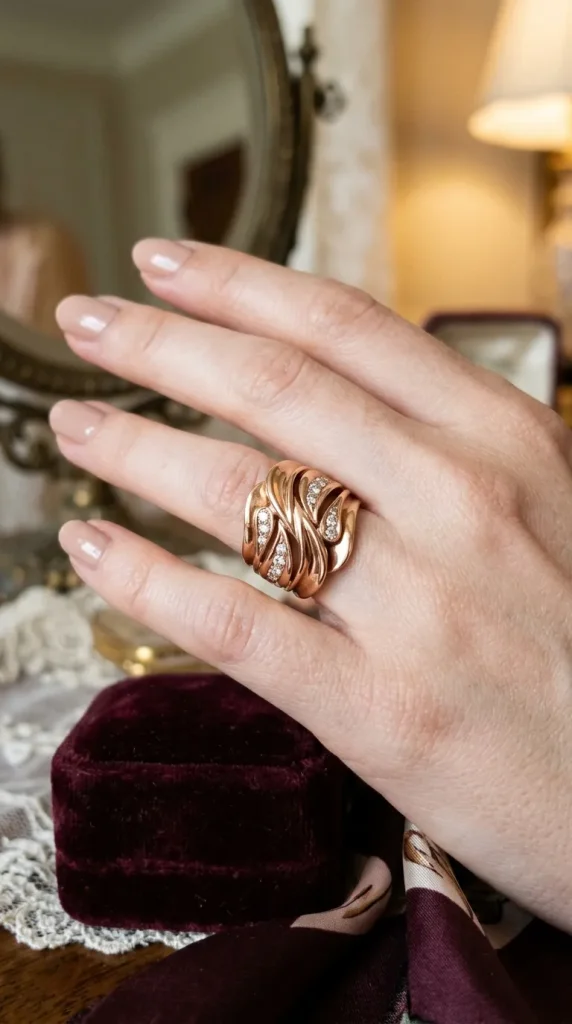
The Retro era (1935–1950) emerged during and after World War II, a time when platinum was restricted for military use. Jewelers turned to gold, specifically warm rose gold and rich yellow gold, to create massive, glamorous pieces inspired by the glitz of old Hollywood. Retro wedding bands often feature asymmetrical folds, scrolls, and ribbon-like metalwork. A wide, polished rose gold band with small, illusion-set diamonds perfectly captures the warmth and drama of this bygone era.
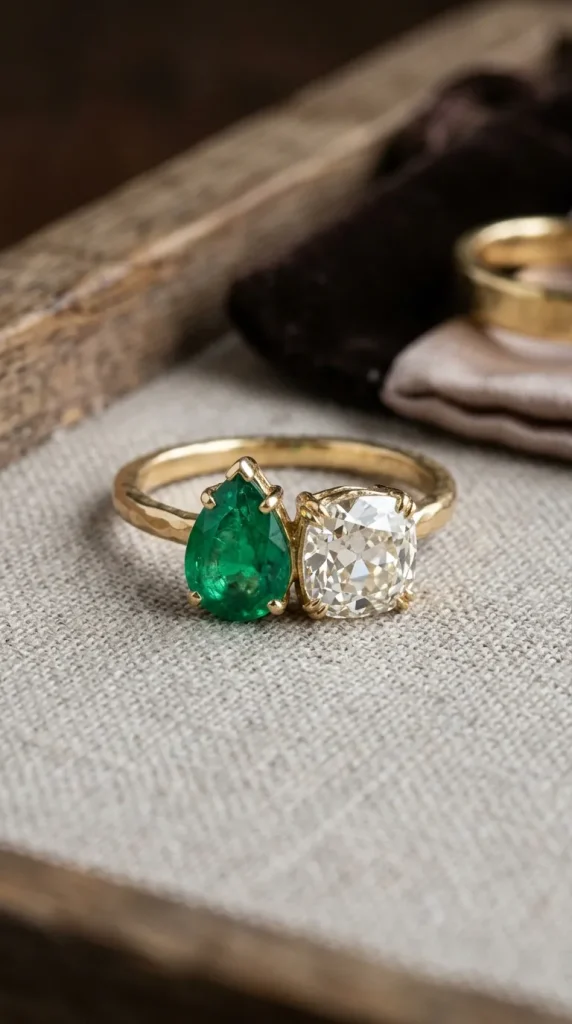
5. The Classic Toi et Moi
French for “You and Me,” the Toi et Moi ring features two contrasting gemstones nesting closely together on a single band, symbolizing two lives intertwining. While it gained massive modern popularity recently, the design is deeply historic, dating back to 1796 when Napoleon Bonaparte proposed to Josephine de Beauharnais with a sapphire and diamond Toi et Moi ring. Choosing a wedding band that incorporates two distinct stones—such as an emerald paired with a pear-cut diamond—creates a beautiful, narrative-driven piece.
6. Georgian Cluster Rings
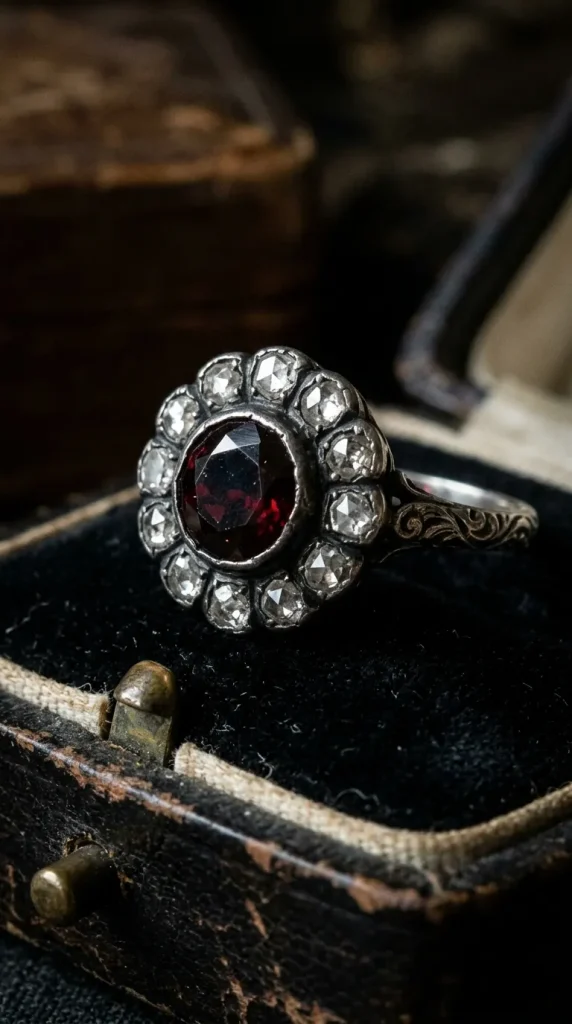
Dating back to the 1700s and early 1800s, Georgian jewelry is incredibly rare and entirely handmade. A hallmark of this era is the cluster design, where a central gemstone is encircled by a “halo” of smaller stones, often resembling a flower. What makes genuine Georgian style distinct is the foil-backed setting, where jewelers placed a thin sheet of silver or colored foil behind the stones to catch candlelight. A wedding ring featuring a tight cluster of old-mine cut diamonds or moody, deep-red garnets captures this dark, romantic historical atmosphere.
7. Mid-Century Starbursts and Texture
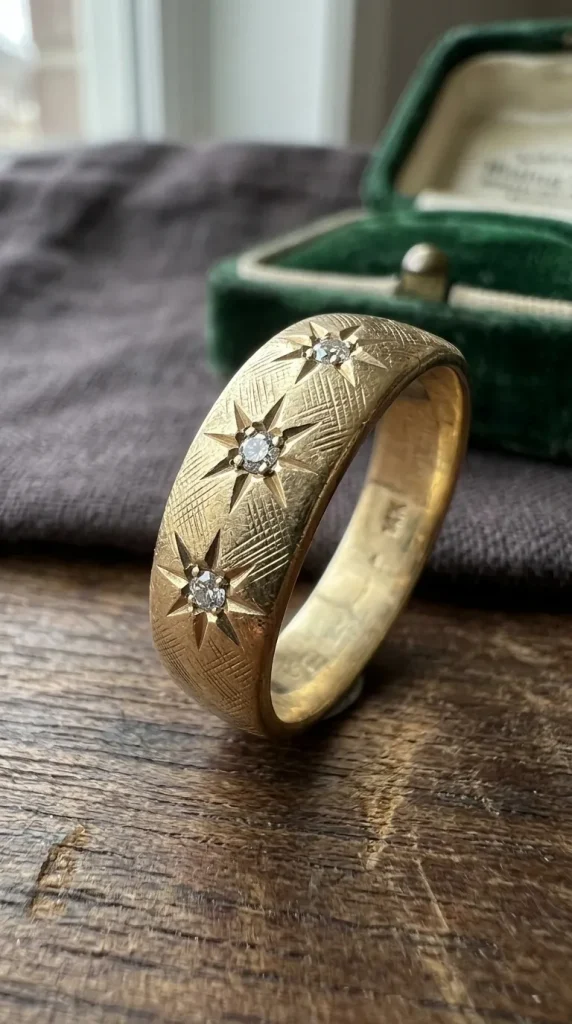
Moving into the 1950s and 1960s, wedding jewelry shifted away from traditional smooth bands toward heavily textured metals. Mid-century rings often feature “Florentine” finishes—a cross-hatched engraving technique that gives gold a textured, fabric-like sheen. Additionally, starburst engravings, where a small diamond is set inside a carved, multi-pointed star, were incredibly popular. A yellow gold wedding band with a Florentine texture and scattered starburst-set diamonds offers a wonderful nostalgic charm.
8. Orange Blossom Engravings
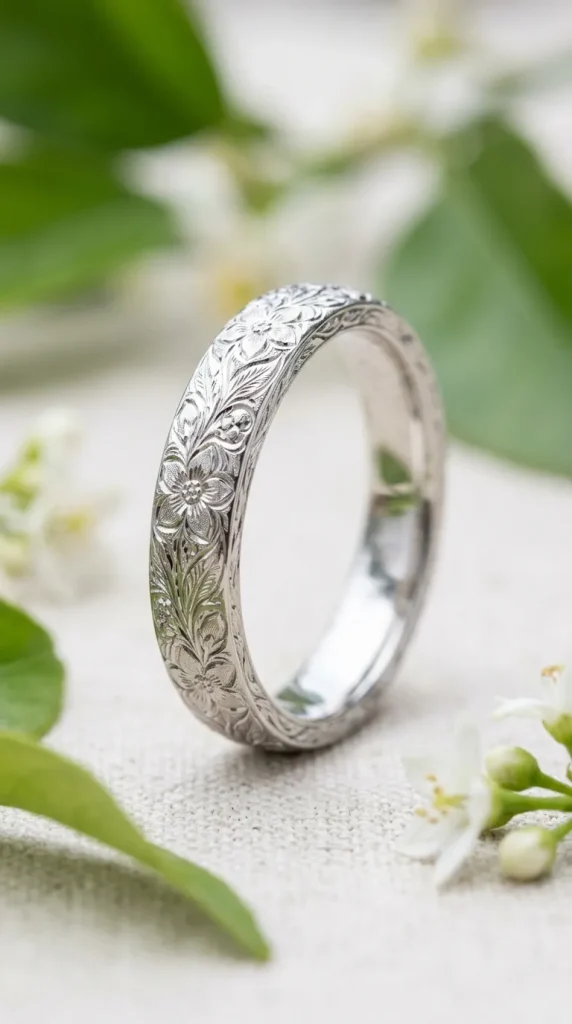
During the late Victorian and Edwardian periods, the orange blossom was the ultimate symbol of fertility, innocence, and eternal love. Queen Victoria wore a crown of orange blossoms on her wedding day, sparking a trend that lasted for decades. Many wedding bands from the early 1900s feature continuous, hand-engraved patterns of orange blossom flowers and leaves wrapping entirely around the band. A continuous floral carved band is a subtle, elegant way to wear a piece of history.
9. East-West Gemstone Orientation
While modern settings typically place elongated stones vertically on the finger, vintage designs frequently utilized an “East-West” orientation, setting marquise, oval, or emerald-cut stones horizontally. This layout was highly favored in early 20th-century avant-garde design circles. An East-West set marquise diamond on a simple, slender band feels wonderfully unconventional yet distinctly antique, offering a flattering, low-profile alternative to traditional stacking rings.
10. Lovers’ Knot Bands
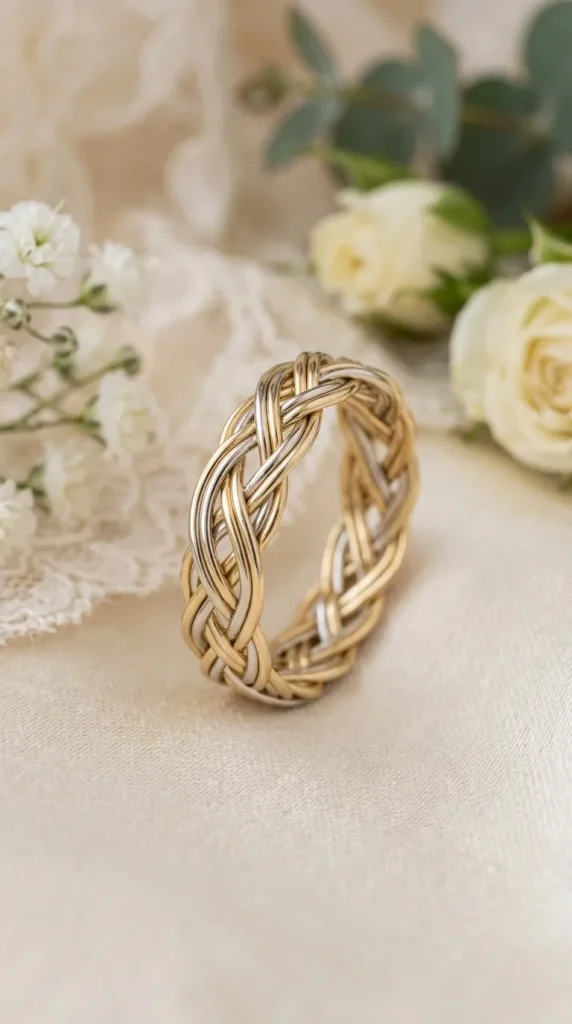
The lovers’ knot is one of the oldest symbols of unbreakable connection, dating back to antiquity but heavily utilized in Renaissance and Victorian jewelry. The design features interconnected loops of gold or platinum that can never be untied. Choosing a wedding band cast or carved into a continuous sailor’s knot or Celtic knot motif provides a profound, texturized piece of jewelry that relies entirely on structural symbolism rather than heavy gemstone embellishments.